Request a Call

<svg id="Group_2498" data-name="Group 2498" xmlns="http://www.w3.org/2000/svg" xmlns:xlink="http://www.w3.org/1999/xlink" width="57.53" height="53.044" viewBox="0 0 57.53 53.044">
<defs>
<clipPath id="clip-path">
<rect id="Rectangle_1550" data-name="Rectangle 1550" width="57.53" height="53.044" fill="none" stroke="#fff" stroke-width="2.5"/>
</clipPath>
</defs>
<rect id="Rectangle_1549" data-name="Rectangle 1549" width="14.301" height="12.25" transform="translate(6.24 6.144)" fill="none" stroke="#fff" stroke-linecap="round" stroke-linejoin="round" stroke-width="2.5"/>
<g id="Group_2494" data-name="Group 2494" transform="translate(0 0)">
<g id="Group_2493" data-name="Group 2493" clip-path="url(#clip-path)">
<path id="Path_23006" data-name="Path 23006" d="M27.406.625H43.643V51.254H.625V.625h16.7" transform="translate(0.573 0.573)" fill="none" stroke="#fff" stroke-linecap="round" stroke-linejoin="round" stroke-width="2.5"/>
</g>
</g>
<rect id="Rectangle_1551" data-name="Rectangle 1551" width="14.301" height="12.25" transform="translate(25.353 6.144)" fill="none" stroke="#fff" stroke-linecap="round" stroke-linejoin="round" stroke-width="2.5"/>
<line id="Line_707" data-name="Line 707" x2="14.301" transform="translate(6.144 23.321)" fill="none" stroke="#fff" stroke-linecap="round" stroke-linejoin="round" stroke-width="2.5"/>
<line id="Line_708" data-name="Line 708" x2="14.301" transform="translate(25.353 23.321)" fill="none" stroke="#fff" stroke-linecap="round" stroke-linejoin="round" stroke-width="2.5"/>
<line id="Line_709" data-name="Line 709" x2="14.301" transform="translate(6.144 45.424)" fill="none" stroke="#fff" stroke-linecap="round" stroke-linejoin="round" stroke-width="2.5"/>
<line id="Line_710" data-name="Line 710" x2="14.301" transform="translate(25.353 45.424)" fill="none" stroke="#fff" stroke-linecap="round" stroke-linejoin="round" stroke-width="2.5"/>
<g id="Group_2496" data-name="Group 2496" transform="translate(0 0)">
<g id="Group_2495" data-name="Group 2495" clip-path="url(#clip-path)">
<path id="Path_23007" data-name="Path 23007" d="M13.285,7.215a2.388,2.388,0,0,1,2.818,0,2.388,2.388,0,0,0,2.818,0,2.388,2.388,0,0,1,2.818,0,2.388,2.388,0,0,0,2.818,0,2.388,2.388,0,0,1,2.818,0" transform="translate(12.183 6.195)" fill="none" stroke="#fff" stroke-linecap="round" stroke-linejoin="round" stroke-width="2.5"/>
<rect id="Rectangle_1552" data-name="Rectangle 1552" width="14.301" height="12.25" transform="translate(25.353 28.247)" fill="none" stroke="#fff" stroke-linecap="round" stroke-linejoin="round" stroke-width="2.5"/>
<path id="Path_23008" data-name="Path 23008" d="M6.385,21.47a3.352,3.352,0,1,1,4.371.038" transform="translate(4.801 14.292)" fill="none" stroke="#fff" stroke-linecap="round" stroke-linejoin="round" stroke-width="2.5"/>
<rect id="Rectangle_1553" data-name="Rectangle 1553" width="14.301" height="12.25" transform="translate(6.24 28.247)" fill="none" stroke="#fff" stroke-linecap="round" stroke-linejoin="round" stroke-width="2.5"/>
<path id="Path_23009" data-name="Path 23009" d="M3.315,18.745a2.388,2.388,0,0,1,2.818,0,2.388,2.388,0,0,0,2.818,0,2.388,2.388,0,0,1,2.818,0,2.388,2.388,0,0,0,2.818,0,2.388,2.388,0,0,1,2.818,0" transform="translate(3.04 16.768)" fill="none" stroke="#fff" stroke-linecap="round" stroke-linejoin="round" stroke-width="2.5"/>
<circle id="Ellipse_378" data-name="Ellipse 378" cx="3.048" cy="3.048" r="3.048" transform="translate(29.455 28.861)" fill="none" stroke="#fff" stroke-linecap="round" stroke-linejoin="round" stroke-width="2.5"/>
<path id="Path_23010" data-name="Path 23010" d="M32.283,43.873l-3.029,7.4-3.029-7.4V3.654a3.029,3.029,0,1,1,6.058,0Z" transform="translate(24.049 0.573)" fill="none" stroke="#fff" stroke-linecap="round" stroke-linejoin="round" stroke-width="2.5"/>
<line id="Line_711" data-name="Line 711" x2="6.058" transform="translate(50.274 43.219)" fill="none" stroke="#fff" stroke-linecap="round" stroke-linejoin="round" stroke-width="2.5"/>
<line id="Line_712" data-name="Line 712" x2="6.058" transform="translate(50.274 7.754)" fill="none" stroke="#fff" stroke-linecap="round" stroke-linejoin="round" stroke-width="2.5"/>
<line id="Line_713" data-name="Line 713" transform="translate(22.937 1.198)" fill="none" stroke="#fff" stroke-linecap="round" stroke-linejoin="round" stroke-width="2.5"/>
</g>
</g>
</svg>
Do I need to hire an Instructional Designer (ID)?
An Instructional Designer (or Learning Experience Designer) creates effective, engaging training that helps employees learn efficiently and meet business goals.




<svg id="Group_2498" data-name="Group 2498" xmlns="http://www.w3.org/2000/svg" xmlns:xlink="http://www.w3.org/1999/xlink" width="57.53" height="53.044" viewBox="0 0 57.53 53.044">
<defs>
<clipPath id="clip-path">
<rect id="Rectangle_1550" data-name="Rectangle 1550" width="57.53" height="53.044" fill="none" stroke="#fff" stroke-width="2.5"/>
</clipPath>
</defs>
<rect id="Rectangle_1549" data-name="Rectangle 1549" width="14.301" height="12.25" transform="translate(6.24 6.144)" fill="none" stroke="#fff" stroke-linecap="round" stroke-linejoin="round" stroke-width="2.5"/>
<g id="Group_2494" data-name="Group 2494" transform="translate(0 0)">
<g id="Group_2493" data-name="Group 2493" clip-path="url(#clip-path)">
<path id="Path_23006" data-name="Path 23006" d="M27.406.625H43.643V51.254H.625V.625h16.7" transform="translate(0.573 0.573)" fill="none" stroke="#fff" stroke-linecap="round" stroke-linejoin="round" stroke-width="2.5"/>
</g>
</g>
<rect id="Rectangle_1551" data-name="Rectangle 1551" width="14.301" height="12.25" transform="translate(25.353 6.144)" fill="none" stroke="#fff" stroke-linecap="round" stroke-linejoin="round" stroke-width="2.5"/>
<line id="Line_707" data-name="Line 707" x2="14.301" transform="translate(6.144 23.321)" fill="none" stroke="#fff" stroke-linecap="round" stroke-linejoin="round" stroke-width="2.5"/>
<line id="Line_708" data-name="Line 708" x2="14.301" transform="translate(25.353 23.321)" fill="none" stroke="#fff" stroke-linecap="round" stroke-linejoin="round" stroke-width="2.5"/>
<line id="Line_709" data-name="Line 709" x2="14.301" transform="translate(6.144 45.424)" fill="none" stroke="#fff" stroke-linecap="round" stroke-linejoin="round" stroke-width="2.5"/>
<line id="Line_710" data-name="Line 710" x2="14.301" transform="translate(25.353 45.424)" fill="none" stroke="#fff" stroke-linecap="round" stroke-linejoin="round" stroke-width="2.5"/>
<g id="Group_2496" data-name="Group 2496" transform="translate(0 0)">
<g id="Group_2495" data-name="Group 2495" clip-path="url(#clip-path)">
<path id="Path_23007" data-name="Path 23007" d="M13.285,7.215a2.388,2.388,0,0,1,2.818,0,2.388,2.388,0,0,0,2.818,0,2.388,2.388,0,0,1,2.818,0,2.388,2.388,0,0,0,2.818,0,2.388,2.388,0,0,1,2.818,0" transform="translate(12.183 6.195)" fill="none" stroke="#fff" stroke-linecap="round" stroke-linejoin="round" stroke-width="2.5"/>
<rect id="Rectangle_1552" data-name="Rectangle 1552" width="14.301" height="12.25" transform="translate(25.353 28.247)" fill="none" stroke="#fff" stroke-linecap="round" stroke-linejoin="round" stroke-width="2.5"/>
<path id="Path_23008" data-name="Path 23008" d="M6.385,21.47a3.352,3.352,0,1,1,4.371.038" transform="translate(4.801 14.292)" fill="none" stroke="#fff" stroke-linecap="round" stroke-linejoin="round" stroke-width="2.5"/>
<rect id="Rectangle_1553" data-name="Rectangle 1553" width="14.301" height="12.25" transform="translate(6.24 28.247)" fill="none" stroke="#fff" stroke-linecap="round" stroke-linejoin="round" stroke-width="2.5"/>
<path id="Path_23009" data-name="Path 23009" d="M3.315,18.745a2.388,2.388,0,0,1,2.818,0,2.388,2.388,0,0,0,2.818,0,2.388,2.388,0,0,1,2.818,0,2.388,2.388,0,0,0,2.818,0,2.388,2.388,0,0,1,2.818,0" transform="translate(3.04 16.768)" fill="none" stroke="#fff" stroke-linecap="round" stroke-linejoin="round" stroke-width="2.5"/>
<circle id="Ellipse_378" data-name="Ellipse 378" cx="3.048" cy="3.048" r="3.048" transform="translate(29.455 28.861)" fill="none" stroke="#fff" stroke-linecap="round" stroke-linejoin="round" stroke-width="2.5"/>
<path id="Path_23010" data-name="Path 23010" d="M32.283,43.873l-3.029,7.4-3.029-7.4V3.654a3.029,3.029,0,1,1,6.058,0Z" transform="translate(24.049 0.573)" fill="none" stroke="#fff" stroke-linecap="round" stroke-linejoin="round" stroke-width="2.5"/>
<line id="Line_711" data-name="Line 711" x2="6.058" transform="translate(50.274 43.219)" fill="none" stroke="#fff" stroke-linecap="round" stroke-linejoin="round" stroke-width="2.5"/>
<line id="Line_712" data-name="Line 712" x2="6.058" transform="translate(50.274 7.754)" fill="none" stroke="#fff" stroke-linecap="round" stroke-linejoin="round" stroke-width="2.5"/>
<line id="Line_713" data-name="Line 713" transform="translate(22.937 1.198)" fill="none" stroke="#fff" stroke-linecap="round" stroke-linejoin="round" stroke-width="2.5"/>
</g>
</g>
</svg>
Do I need to hire an Instructional Designer (ID)?
An Instructional Designer (or Learning Experience Designer) creates effective, engaging training that helps employees learn efficiently and meet business goals.
Driving success with Top Brands


































<svg id="Group_2499" data-name="Group 2499" xmlns="http://www.w3.org/2000/svg" xmlns:xlink="http://www.w3.org/1999/xlink" width="27.892" height="30" viewBox="0 0 27.892 30">
<defs>
<clipPath id="clip-path">
<rect id="Rectangle_1557" data-name="Rectangle 1557" width="27.892" height="30" fill="none"/>
</clipPath>
</defs>
<g id="Group_2499-2" data-name="Group 2499" clip-path="url(#clip-path)">
<path id="Path_23011" data-name="Path 23011" d="M23.592,6.867A13.324,13.324,0,0,1,20.7,27.538" fill="none" stroke="#000c19" stroke-linecap="round" stroke-linejoin="round" stroke-width="1.25"/>
<path id="Path_23012" data-name="Path 23012" d="M1.447,11.437a13.322,13.322,0,0,1,2.91-4.63" fill="none" stroke="#000c19" stroke-linecap="round" stroke-linejoin="round" stroke-width="1.25"/>
<path id="Path_23013" data-name="Path 23013" d="M.893,13.385A13.341,13.341,0,0,0,7.184,27.534" fill="none" stroke="#000c19" stroke-linecap="round" stroke-linejoin="round" stroke-width="1.25"/>
<path id="Path_23014" data-name="Path 23014" d="M11.954,17.962a13.27,13.27,0,0,0-2.508.642h0a.291.291,0,0,1-.38-.2L8.51,16.182a8.556,8.556,0,0,1,.479-5.532l0-.007A5.419,5.419,0,0,1,18.025,9.27" fill="none" stroke="#000c19" stroke-linecap="round" stroke-linejoin="round" stroke-width="1.25"/>
<path id="Path_23015" data-name="Path 23015" d="M19.057,11.022a8.545,8.545,0,0,1,.323,5.15l-.55,2.213a.29.29,0,0,1-.281.22.287.287,0,0,1-.1-.018,13.24,13.24,0,0,0-2.528-.635" fill="none" stroke="#000c19" stroke-linecap="round" stroke-linejoin="round" stroke-width="1.25"/>
<path id="Path_23016" data-name="Path 23016" d="M10.486,13.265c.031-1.949,2.058-3.272,3.46-3.537,1.437.27,3.46,1.577,3.46,3.582v1.111A4.823,4.823,0,0,1,14.374,18.9a1.148,1.148,0,0,1-.857,0,4.827,4.827,0,0,1-2.953-3.609" fill="none" stroke="#000c19" stroke-linecap="round" stroke-linejoin="round" stroke-width="1.25"/>
<path id="Path_23017" data-name="Path 23017" d="M12.579,18.421v1.528a1.025,1.025,0,0,1-.8,1l-3.488.771a1.365,1.365,0,0,0-1.072,1.334v.825" fill="none" stroke="#000c19" stroke-linecap="round" stroke-linejoin="round" stroke-width="1.25"/>
<path id="Path_23018" data-name="Path 23018" d="M15.313,18.421v1.528a1.025,1.025,0,0,0,.8,1l3.488.771a1.365,1.365,0,0,1,1.072,1.334v.825" fill="none" stroke="#000c19" stroke-linecap="round" stroke-linejoin="round" stroke-width="1.25"/>
<line id="Line_715" data-name="Line 715" y1="2.19" transform="translate(13.946 7.48)" fill="none" stroke="#000c19" stroke-linecap="round" stroke-linejoin="round" stroke-width="1.25"/>
<path id="Path_23019" data-name="Path 23019" d="M15.248,26.884v2.491h-2.6V22.607h2.6v2.252" fill="none" stroke="#000c19" stroke-linecap="round" stroke-linejoin="round" stroke-width="1.25"/>
<rect id="Rectangle_1555" data-name="Rectangle 1555" width="2.603" height="3.587" transform="translate(18.074 25.788)" fill="none" stroke="#000c19" stroke-linecap="round" stroke-linejoin="round" stroke-width="1.25"/>
<rect id="Rectangle_1556" data-name="Rectangle 1556" width="2.603" height="3.587" transform="translate(7.215 25.788)" fill="none" stroke="#000c19" stroke-linecap="round" stroke-linejoin="round" stroke-width="1.25"/>
<path id="Path_23020" data-name="Path 23020" d="M13.946.625l.8,1.619,1.786.259-1.292,1.26.305,1.779-1.6-.84-1.6.84.305-1.779L11.361,2.5l1.786-.259Z" fill="none" stroke="#000c19" stroke-linecap="round" stroke-linejoin="round" stroke-width="1.25"/>
<path id="Path_23021" data-name="Path 23021" d="M7.694,2.307l.8,1.619,1.786.259L8.987,5.445l.305,1.779-1.6-.84-1.6.84L6.4,5.445,5.109,4.185l1.786-.259Z" fill="none" stroke="#000c19" stroke-linecap="round" stroke-linejoin="round" stroke-width="1.25"/>
<path id="Path_23022" data-name="Path 23022" d="M20.2,2.307,21,3.926l1.786.259L21.49,5.445,21.8,7.224l-1.6-.84-1.6.84.305-1.779-1.292-1.26L19.4,3.926Z" fill="none" stroke="#000c19" stroke-linecap="round" stroke-linejoin="round" stroke-width="1.25"/>
</g>
</svg>
Instructional designers are experts in designing effective learning experiences
Your employees are busy, so it’s important to make the most of every training minute. A contract instructional designer can help ensure that your training or eLearning courses are engaging, effective, and aligned with your learning objectives.
<svg id="Group_2500" data-name="Group 2500" xmlns="http://www.w3.org/2000/svg" xmlns:xlink="http://www.w3.org/1999/xlink" width="26.225" height="30" viewBox="0 0 26.225 30">
<defs>
<clipPath id="clip-path">
<rect id="Rectangle_1558" data-name="Rectangle 1558" width="26.225" height="30" fill="none"/>
</clipPath>
</defs>
<g id="Group_2500-2" data-name="Group 2500" clip-path="url(#clip-path)">
<path id="Path_23023" data-name="Path 23023" d="M6.866,16.8a1.889,1.889,0,0,1-1.153-2.454s-1.72-.647-1.72-3.382S5.751,7.685,5.751,7.685A2.326,2.326,0,0,1,6.107,5.6,2.051,2.051,0,0,1,8,5.1,1.536,1.536,0,0,1,9.134,3.728a1.589,1.589,0,0,1,1.514.178,1.358,1.358,0,0,1,.38-.367.7.7,0,0,1,1.077.588V20.29a.755.755,0,0,1-1.494.154l-.291-1.392a3.34,3.34,0,0,1-2.695-.387" fill="none" stroke="#000c19" stroke-linecap="round" stroke-linejoin="round" stroke-width="1.25"/>
<path id="Path_23024" data-name="Path 23024" d="M5.751,7.684a7.512,7.512,0,0,1,.529,2.954" fill="none" stroke="#000c19" stroke-linecap="round" stroke-linejoin="round" stroke-width="1.25"/>
<path id="Path_23025" data-name="Path 23025" d="M9.67,6.5S12.1,7.61,12.1,9.629" fill="none" stroke="#000c19" stroke-linecap="round" stroke-linejoin="round" stroke-width="1.25"/>
<path id="Path_23026" data-name="Path 23026" d="M10.32,19.051A6.938,6.938,0,0,0,8.893,15.9" fill="none" stroke="#000c19" stroke-linecap="round" stroke-linejoin="round" stroke-width="1.25"/>
<path id="Path_23027" data-name="Path 23027" d="M8.892,9.351s.344,2.526-1.223,3.2" fill="none" stroke="#000c19" stroke-linecap="round" stroke-linejoin="round" stroke-width="1.25"/>
<path id="Path_23028" data-name="Path 23028" d="M19.636,8.719a8.028,8.028,0,0,1-.724,6.941A12.459,12.459,0,0,0,17,22.23v.109H12.1V4.218a.744.744,0,0,1,.818-.74,7.949,7.949,0,0,1,2,.47" fill="none" stroke="#000c19" stroke-linecap="round" stroke-linejoin="round" stroke-width="1.25"/>
<line id="Line_716" data-name="Line 716" y1="0.612" x2="0.887" transform="translate(2.588 17.811)" fill="none" stroke="#000c19" stroke-linecap="round" stroke-linejoin="round" stroke-width="1.25"/>
<line id="Line_717" data-name="Line 717" y1="0.13" x2="1.07" transform="translate(0.625 13.117)" fill="none" stroke="#000c19" stroke-linecap="round" stroke-linejoin="round" stroke-width="1.25"/>
<line id="Line_718" data-name="Line 718" x2="1.008" y2="0.382" transform="translate(1.292 7.753)" fill="none" stroke="#000c19" stroke-linecap="round" stroke-linejoin="round" stroke-width="1.25"/>
<line id="Line_719" data-name="Line 719" x2="0.715" y2="0.807" transform="translate(4.437 3.197)" fill="none" stroke="#000c19" stroke-linecap="round" stroke-linejoin="round" stroke-width="1.25"/>
<line id="Line_720" data-name="Line 720" x2="0.258" y2="1.046" transform="translate(9.337 0.625)" fill="none" stroke="#000c19" stroke-linecap="round" stroke-linejoin="round" stroke-width="1.25"/>
<line id="Line_721" data-name="Line 721" x1="0.258" y2="1.046" transform="translate(14.615 0.625)" fill="none" stroke="#000c19" stroke-linecap="round" stroke-linejoin="round" stroke-width="1.25"/>
<line id="Line_722" data-name="Line 722" x1="1.07" y1="0.13" transform="translate(22.515 13.117)" fill="none" stroke="#000c19" stroke-linecap="round" stroke-linejoin="round" stroke-width="1.25"/>
<line id="Line_723" data-name="Line 723" x1="0.887" y1="0.612" transform="translate(20.735 17.811)" fill="none" stroke="#000c19" stroke-linecap="round" stroke-linejoin="round" stroke-width="1.25"/>
<path id="Path_23029" data-name="Path 23029" d="M17,22.34H8.005a.792.792,0,0,0-.792.792V25.5A1.521,1.521,0,0,0,8.734,27.02h6.743A1.521,1.521,0,0,0,17,25.5Z" fill="none" stroke="#000c19" stroke-linecap="round" stroke-linejoin="round" stroke-width="1.25"/>
<path id="Path_23030" data-name="Path 23030" d="M12.977,29.375H11.232a1.259,1.259,0,0,1-1.259-1.259v-1.1h4.264v1.1A1.26,1.26,0,0,1,12.977,29.375Z" fill="none" stroke="#000c19" stroke-linecap="round" stroke-linejoin="round" stroke-width="1.25"/>
<path id="Path_23031" data-name="Path 23031" d="M14.109,22.34s.409-6.208,2.455-8.142c0,0-1.411.973-2.328.744-.78-.194-.871-2.054-.871-2.054S12.7,14.533,12.1,14.57" fill="none" stroke="#000c19" stroke-linecap="round" stroke-linejoin="round" stroke-width="1.25"/>
<path id="Path_23032" data-name="Path 23032" d="M19.636,8.719H17.544A.539.539,0,0,1,17,8.18V5.84" fill="none" stroke="#000c19" stroke-linecap="round" stroke-linejoin="round" stroke-width="1.25"/>
<path id="Path_23033" data-name="Path 23033" d="M23.218,5.84V8.18a.54.54,0,0,1-.54.54h-.971" fill="none" stroke="#000c19" stroke-linecap="round" stroke-linejoin="round" stroke-width="1.25"/>
<path id="Path_23034" data-name="Path 23034" d="M25.147,5.156l-4.506,1.6a1.584,1.584,0,0,1-1.061,0l-4.506-1.6a.68.68,0,0,1,0-1.281l4.506-1.6a1.584,1.584,0,0,1,1.061,0l4.506,1.6a.68.68,0,0,1,0,1.281Z" fill="none" stroke="#000c19" stroke-linecap="round" stroke-linejoin="round" stroke-width="1.25"/>
<line id="Line_724" data-name="Line 724" y2="5.116" transform="translate(25.147 5.156)" fill="none" stroke="#000c19" stroke-linecap="round" stroke-linejoin="round" stroke-width="1.25"/>
</g>
</svg>
Instructional designers have a deep understanding of learning theory
A qualified, contract Instructional designer is well-versed in the latest learning theories and trends. They apply that knowledge to structure and design effective learning experiences that maximize performance outcomes.
<svg id="Group_2503" data-name="Group 2503" xmlns="http://www.w3.org/2000/svg" xmlns:xlink="http://www.w3.org/1999/xlink" width="26.666" height="30" viewBox="0 0 26.666 30">
<defs>
<clipPath id="clip-path">
<rect id="Rectangle_1559" data-name="Rectangle 1559" width="26.666" height="30" fill="none"/>
</clipPath>
</defs>
<line id="Line_725" data-name="Line 725" x1="6.975" y1="4.027" transform="translate(4.559 22.192)" fill="none" stroke="#000c19" stroke-linecap="round" stroke-linejoin="round" stroke-width="1.25"/>
<line id="Line_726" data-name="Line 726" x1="6.92" y2="3.995" transform="translate(15.178 22.224)" fill="none" stroke="#000c19" stroke-linecap="round" stroke-linejoin="round" stroke-width="1.25"/>
<line id="Line_727" data-name="Line 727" y1="1.422" transform="translate(2.729 17.63)" fill="none" stroke="#000c19" stroke-linecap="round" stroke-linejoin="round" stroke-width="1.25"/>
<line id="Line_728" data-name="Line 728" y2="1.348" transform="translate(2.729 10.979)" fill="none" stroke="#000c19" stroke-linecap="round" stroke-linejoin="round" stroke-width="1.25"/>
<line id="Line_729" data-name="Line 729" y2="8.103" transform="translate(23.983 10.91)" fill="none" stroke="#000c19" stroke-linecap="round" stroke-linejoin="round" stroke-width="1.25"/>
<line id="Line_730" data-name="Line 730" x2="6.925" y2="3.998" transform="translate(15.178 3.78)" fill="none" stroke="#000c19" stroke-linecap="round" stroke-linejoin="round" stroke-width="1.25"/>
<line id="Line_731" data-name="Line 731" y1="4.018" x2="6.959" transform="translate(4.576 3.78)" fill="none" stroke="#000c19" stroke-linecap="round" stroke-linejoin="round" stroke-width="1.25"/>
<g id="Group_2502" data-name="Group 2502">
<g id="Group_2501" data-name="Group 2501" clip-path="url(#clip-path)">
<path id="Path_23035" data-name="Path 23035" d="M11.252,27.271a2.1,2.1,0,1,1,2.1,2.1A2.1,2.1,0,0,1,11.252,27.271Z" fill="none" stroke="#000c19" stroke-linecap="round" stroke-linejoin="round" stroke-width="1.25"/>
<path id="Path_23036" data-name="Path 23036" d="M11.252,2.729a2.1,2.1,0,1,1,2.1,2.1A2.1,2.1,0,0,1,11.252,2.729Z" fill="none" stroke="#000c19" stroke-linecap="round" stroke-linejoin="round" stroke-width="1.25"/>
<path id="Path_23037" data-name="Path 23037" d="M21.834,8.806a2.1,2.1,0,1,1,2.1,2.1A2.1,2.1,0,0,1,21.834,8.806Z" fill="none" stroke="#000c19" stroke-linecap="round" stroke-linejoin="round" stroke-width="1.25"/>
<path id="Path_23038" data-name="Path 23038" d="M21.834,21.155a2.1,2.1,0,1,1,2.1,2.1A2.1,2.1,0,0,1,21.834,21.155Z" fill="none" stroke="#000c19" stroke-linecap="round" stroke-linejoin="round" stroke-width="1.25"/>
<path id="Path_23039" data-name="Path 23039" d="M.625,8.806a2.1,2.1,0,1,1,2.1,2.1A2.1,2.1,0,0,1,.625,8.806Z" fill="none" stroke="#000c19" stroke-linecap="round" stroke-linejoin="round" stroke-width="1.25"/>
<path id="Path_23040" data-name="Path 23040" d="M.625,21.155a2.1,2.1,0,1,1,2.1,2.1A2.1,2.1,0,0,1,.625,21.155Z" fill="none" stroke="#000c19" stroke-linecap="round" stroke-linejoin="round" stroke-width="1.25"/>
<line id="Line_732" data-name="Line 732" x1="3.795" y2="2.222" transform="translate(18.327 9.868)" fill="none" stroke="#000c19" stroke-linecap="round" stroke-linejoin="round" stroke-width="1.25"/>
<line id="Line_733" data-name="Line 733" y2="4.558" transform="translate(13.356 4.832)" fill="none" stroke="#000c19" stroke-linecap="round" stroke-linejoin="round" stroke-width="1.25"/>
<line id="Line_734" data-name="Line 734" y2="4.558" transform="translate(13.356 20.61)" fill="none" stroke="#000c19" stroke-linecap="round" stroke-linejoin="round" stroke-width="1.25"/>
<line id="Line_735" data-name="Line 735" x2="3.886" y2="2.256" transform="translate(18.206 17.827)" fill="none" stroke="#000c19" stroke-linecap="round" stroke-linejoin="round" stroke-width="1.25"/>
<line id="Line_736" data-name="Line 736" x2="3.795" y2="2.222" transform="translate(4.589 9.868)" fill="none" stroke="#000c19" stroke-linecap="round" stroke-linejoin="round" stroke-width="1.25"/>
<line id="Line_737" data-name="Line 737" x1="3.886" y2="2.256" transform="translate(4.62 17.827)" fill="none" stroke="#000c19" stroke-linecap="round" stroke-linejoin="round" stroke-width="1.25"/>
<circle id="Ellipse_379" data-name="Ellipse 379" cx="5.61" cy="5.61" r="5.61" transform="translate(7.746 9.39)" fill="none" stroke="#000c19" stroke-linecap="round" stroke-linejoin="round" stroke-width="1.25"/>
<path id="Path_23041" data-name="Path 23041" d="M13.356,12.849h0a1.824,1.824,0,0,0-1.824,1.824v.315a1.824,1.824,0,0,0,3.648,0v-.315A1.824,1.824,0,0,0,13.356,12.849Z" fill="none" stroke="#000c19" stroke-linecap="round" stroke-linejoin="round" stroke-width="1.25"/>
<path id="Path_23042" data-name="Path 23042" d="M17,19.222h0a2.41,2.41,0,0,0-2.41-2.41H12.118a2.41,2.41,0,0,0-2.41,2.41" fill="none" stroke="#000c19" stroke-linecap="round" stroke-linejoin="round" stroke-width="1.25"/>
<line id="Line_738" data-name="Line 738" transform="translate(2.709 15.007)" fill="none" stroke="#000c19" stroke-linecap="round" stroke-linejoin="round" stroke-width="1.25"/>
</g>
</g>
</svg>
Instructional designers collaborate with your team
Instructional designers work closely with your subject matter experts (SMEs) to design and develop training that is sure to stick. They partner with other professionals, such as project managers, eLearning developers, learning management system (LMS) administrators, technical writers, and quality assurance professionals, to help ensure that the training curriculum is developed on time, within budget, and to the desired quality standards.
<svg xmlns="http://www.w3.org/2000/svg" xmlns:xlink="http://www.w3.org/1999/xlink" width="30" height="25.835" viewBox="0 0 30 25.835">
<defs>
<clipPath id="clip-path">
<rect id="Rectangle_1560" data-name="Rectangle 1560" width="30" height="25.835" transform="translate(0 0)" fill="none"/>
</clipPath>
</defs>
<g id="Group_2504" data-name="Group 2504" transform="translate(0 0)">
<g id="Group_2504-2" data-name="Group 2504" clip-path="url(#clip-path)">
<path id="Path_23043" data-name="Path 23043" d="M12.918,11.518a1.4,1.4,0,1,1-1.4,1.4A1.4,1.4,0,0,1,12.918,11.518ZM24.444,17.2a12.277,12.277,0,1,0-7.287,7.262m5.367-8.69A10.022,10.022,0,0,0,7.406,4.548M4.549,7.405a10.021,10.021,0,0,0,11.2,15.125M5.818,5.848,5.8,5.863m15.26,7.063h-.706M4.773,12.907h.705m7.449-8.135v.706m-.019,15.584v-.706m-.98-8.429L9.645,9.644m4.262,2.283L18.164,7.67M6.665,17.715q.066.085.135.171a7.874,7.874,0,0,0,3.131,2.322M5.654,15.969c.005.013.011.027.017.04M18.7,25.143H29.376V23.365H18.7Zm-1.777-1.778H27.595V21.587H16.927ZM23.1,19.809H18.7v1.778H29.375V19.809h-4.4m-1.871,0H16.927V18.031H27.6v1.778H24.975" fill="none" stroke="#000c19" stroke-linecap="round" stroke-linejoin="round" stroke-width="1.25"/>
</g>
</g>
</svg>
Instructional designers can save time and money
Hiring an instructional designer can save you time and money by ensuring that your training is aligned with your company’s business needs and key performance indicators (KPIs). They leverage instructional strategies that are both effective and scalable. This can help reduce the need for costly revisions in the future.

Elevate Your Team with ELB Learning: Innovative Instructional Design Consulting Services
ELB Learning is your premier destination for cutting-edge instructional design consulting services. Our team is dedicated to revolutionizing how you engage with learning and development.
We understand that every organization has distinct learning needs. That’s why our instructional design consulting services are designed to be fully customizable, ensuring that your learning content reflects your brand, values, and learning objectives. Whether you need assistance with curriculum development, content design, or instructional strategy, our team is here to support you every step.

What’s the difference between an Instructional Designer (ID) and a Learning Experience Designer (LXD)?
Both Instructional Designers (ID) and Learning Experience Designers (LXD) have a background in learning theory and take a goal-oriented, tactical approach. However, they focus on slightly different things during design and development.
For example, imagine that you want to create a self-paced microlearning curriculum. Both an ID and an LXD would start by defining your learning goals and objectives. Instructional design consulting services will help you create a series of eLearning modules and assessments. A learning experience designer might help you create realistic scenarios and practice activities, or a mixture of eLearning, videos, scenarios, job aids, games, and/or simulations.
Instructional Designers
Instructional Designers apply instructional design models and principles to systematically outline, design, write, and/or develop courses and curricula.
Learning Experience Designers
Learning Experience Designers apply cognitive psychology and user experience design principles to strategically outline, design, write, and/or develop a learning journey.
How does instructional design consulting services improve the effectiveness of your training program?
<svg id="Group_2616" data-name="Group 2616" xmlns="http://www.w3.org/2000/svg" xmlns:xlink="http://www.w3.org/1999/xlink" width="24.316" height="30" viewBox="0 0 24.316 30">
<defs>
<clipPath id="clip-path">
<rect id="Rectangle_1561" data-name="Rectangle 1561" width="24.316" height="30" fill="none"/>
</clipPath>
</defs>
<g id="Group_2616-2" data-name="Group 2616" clip-path="url(#clip-path)">
<path id="Path_23044" data-name="Path 23044" d="M21.643,20.751v1.343A2.33,2.33,0,0,1,19.2,24.421l-2.606-.142a1.5,1.5,0,0,0-1.569,1.5v2.458a1.144,1.144,0,0,1-1.144,1.143H6.56a1.144,1.144,0,0,1-1.144-1.143V23.518a3.17,3.17,0,0,0-.722-2.02C2.819,19.225-1.785,12.542,2.2,5.679,5.8-.5,14.5-.858,19.222,3.762" fill="none" stroke="#000c19" stroke-linecap="round" stroke-linejoin="round" stroke-width="1.25"/>
<path id="Path_23045" data-name="Path 23045" d="M20.7,5.59a11.566,11.566,0,0,1,1.666,6.881c-.022.447,0,1.787,0,1.787l1.3,3.188a.721.721,0,0,1-.52.882l-1.5.384" fill="none" stroke="#000c19" stroke-linecap="round" stroke-linejoin="round" stroke-width="1.25"/>
<path id="Path_23046" data-name="Path 23046" d="M16.92,9.37h.5a.652.652,0,0,1,.652.653v1.505a.652.652,0,0,1-.652.652H16.108a5.316,5.316,0,0,1-.5,1.229l.921.921a.651.651,0,0,1,0,.922l-1.065,1.065a.653.653,0,0,1-.922,0l-.9-.9a5.335,5.335,0,0,1-1.249.537v1.253a.653.653,0,0,1-.653.652H10.232a.653.653,0,0,1-.652-.652V16a5.406,5.406,0,0,1-1.306-.523l-.843.844a.653.653,0,0,1-.922,0L5.444,15.252a.651.651,0,0,1,0-.922l.822-.823a5.368,5.368,0,0,1-.558-1.327H4.554a.651.651,0,0,1-.651-.652V10.023a.651.651,0,0,1,.651-.653H5.708a5.368,5.368,0,0,1,.558-1.327l-.822-.822a.652.652,0,0,1,0-.923L6.509,5.234a.651.651,0,0,1,.922,0l.843.843A5.363,5.363,0,0,1,9.58,5.555V4.344a.653.653,0,0,1,.652-.653h1.506a.653.653,0,0,1,.653.653V5.6a5.377,5.377,0,0,1,1.249.537l.9-.9a.651.651,0,0,1,.922,0L16.527,6.3a.652.652,0,0,1,.072.087" fill="none" stroke="#000c19" stroke-linecap="round" stroke-linejoin="round" stroke-width="1.25"/>
<path id="Path_23047" data-name="Path 23047" d="M8.747,9.774a2.383,2.383,0,0,1,4.365.1" fill="none" stroke="#000c19" stroke-linecap="round" stroke-linejoin="round" stroke-width="1.25"/>
<path id="Path_23048" data-name="Path 23048" d="M11.771,12.995A2.384,2.384,0,0,1,8.749,11.78" fill="none" stroke="#000c19" stroke-linecap="round" stroke-linejoin="round" stroke-width="1.25"/>
<line id="Line_739" data-name="Line 739" y2="1.588" transform="translate(16.772 17.859)" fill="none" stroke="#000c19" stroke-linecap="round" stroke-linejoin="round" stroke-width="1.25"/>
<line id="Line_740" data-name="Line 740" x1="1.588" transform="translate(15.978 18.653)" fill="none" stroke="#000c19" stroke-linecap="round" stroke-linejoin="round" stroke-width="1.25"/>
<path id="Path_23049" data-name="Path 23049" d="M22.561,3.73l-8.13,8.13-1.654-1.653,8.131-8.13a.771.771,0,0,1,1.092,0l.561.56A.773.773,0,0,1,22.561,3.73Z" fill="none" stroke="#000c19" stroke-linecap="round" stroke-linejoin="round" stroke-width="1.25"/>
<path id="Path_23050" data-name="Path 23050" d="M14.43,11.86l-1.653-1.653-1.155,2.232a.427.427,0,0,0,.576.576Z" fill="none" stroke="#000c19" stroke-linecap="round" stroke-linejoin="round" stroke-width="1.25"/>
<path id="Path_23051" data-name="Path 23051" d="M22.561,3.73,21.39,4.9,19.737,3.247l1.171-1.17a.771.771,0,0,1,1.092,0l.561.56A.773.773,0,0,1,22.561,3.73Z" fill="none" stroke="#000c19" stroke-linecap="round" stroke-linejoin="round" stroke-width="1.25"/>
</g>
</svg>
Designing learner-centered content
Training must be memorable to be effective. Instructional designers have expertise in designing user-friendly learning experiences that ensure the content is easy to understand and retain. Contract Instructional designers create learning materials that are tailored to the needs and preferences of your learners, resulting in higher engagement and retention.
<svg id="Group_2617" data-name="Group 2617" xmlns="http://www.w3.org/2000/svg" xmlns:xlink="http://www.w3.org/1999/xlink" width="29.712" height="30" viewBox="0 0 29.712 30">
<defs>
<clipPath id="clip-path">
<rect id="Rectangle_1562" data-name="Rectangle 1562" width="29.712" height="30" fill="none"/>
</clipPath>
</defs>
<g id="Group_2617-2" data-name="Group 2617" clip-path="url(#clip-path)">
<path id="Path_23052" data-name="Path 23052" d="M20.257,21.255v7.033a1.087,1.087,0,0,1-1.087,1.087H1.712A1.087,1.087,0,0,1,.625,28.288V5.5A1.087,1.087,0,0,1,1.712,4.417H19.08" fill="none" stroke="#000c19" stroke-linecap="round" stroke-linejoin="round" stroke-width="1.25"/>
<line id="Line_741" data-name="Line 741" y2="9.708" transform="translate(20.257 9.517)" fill="none" stroke="#000c19" stroke-linecap="round" stroke-linejoin="round" stroke-width="1.25"/>
<path id="Path_23053" data-name="Path 23053" d="M9.965,6.439H13.8a.893.893,0,1,1,0,1.787H7.082a.893.893,0,1,1,0-1.787h.852" fill="none" stroke="#000c19" stroke-linecap="round" stroke-linejoin="round" stroke-width="1.25"/>
<path id="Path_23054" data-name="Path 23054" d="M27.139,4.42h-1a3.644,3.644,0,0,0-.232-.558l.7-.7a.4.4,0,0,0,0-.571L25.58,1.551a.4.4,0,0,0-.57,0l-.7.7a3.7,3.7,0,0,0-.558-.231v-1a.4.4,0,0,0-.4-.4H21.879a.4.4,0,0,0-.4.4v1a3.743,3.743,0,0,0-.558.231l-.7-.7a.4.4,0,0,0-.571,0L18.606,2.587a.4.4,0,0,0,0,.571l.7.7a3.644,3.644,0,0,0-.232.558h-1a.4.4,0,0,0-.4.4V6.288a.4.4,0,0,0,.4.4h1a3.6,3.6,0,0,0,.232.558l-.7.7a.4.4,0,0,0,0,.571l1.036,1.036a.4.4,0,0,0,.571,0l.7-.7a3.743,3.743,0,0,0,.558.231v1a.4.4,0,0,0,.4.4h1.465a.4.4,0,0,0,.4-.4v-1a3.7,3.7,0,0,0,.558-.231l.7.7a.4.4,0,0,0,.571,0l1.036-1.036a.4.4,0,0,0,0-.571l-.7-.7a3.7,3.7,0,0,0,.232-.558h1a.4.4,0,0,0,.4-.4V4.824A.4.4,0,0,0,27.139,4.42Z" fill="none" stroke="#000c19" stroke-linecap="round" stroke-linejoin="round" stroke-width="1.25"/>
<circle id="Ellipse_380" data-name="Ellipse 380" cx="1.352" cy="1.352" r="1.352" transform="translate(21.259 4.204)" fill="none" stroke="#000c19" stroke-linecap="round" stroke-linejoin="round" stroke-width="1.25"/>
<circle id="Ellipse_381" data-name="Ellipse 381" cx="2.327" cy="2.327" r="2.327" transform="translate(3.568 10.767)" fill="none" stroke="#000c19" stroke-linecap="round" stroke-linejoin="round" stroke-width="1.25"/>
<circle id="Ellipse_382" data-name="Ellipse 382" cx="2.327" cy="2.327" r="2.327" transform="translate(12.66 10.767)" fill="none" stroke="#000c19" stroke-linecap="round" stroke-linejoin="round" stroke-width="1.25"/>
<circle id="Ellipse_383" data-name="Ellipse 383" cx="2.327" cy="2.327" r="2.327" transform="translate(3.568 18.928)" fill="none" stroke="#000c19" stroke-linecap="round" stroke-linejoin="round" stroke-width="1.25"/>
<circle id="Ellipse_384" data-name="Ellipse 384" cx="2.327" cy="2.327" r="2.327" transform="translate(12.66 18.928)" fill="none" stroke="#000c19" stroke-linecap="round" stroke-linejoin="round" stroke-width="1.25"/>
<path id="Path_23055" data-name="Path 23055" d="M25.659,17.828a3.428,3.428,0,1,1-3.427,3.427A3.428,3.428,0,0,1,25.659,17.828Z" fill="none" stroke="#000c19" stroke-linecap="round" stroke-linejoin="round" stroke-width="1.25"/>
<path id="Path_23056" data-name="Path 23056" d="M26.948,20.729,25.4,22.059l-.844-.844" fill="none" stroke="#000c19" stroke-linecap="round" stroke-linejoin="round" stroke-width="1.25"/>
<line id="Line_742" data-name="Line 742" x2="4.437" transform="translate(8.222 13.094)" fill="none" stroke="#000c19" stroke-linecap="round" stroke-linejoin="round" stroke-width="1.25"/>
<line id="Line_743" data-name="Line 743" x1="6.073" y2="4.724" transform="translate(7.082 14.528)" fill="none" stroke="#000c19" stroke-linecap="round" stroke-linejoin="round" stroke-width="1.25"/>
<line id="Line_744" data-name="Line 744" x2="4.437" transform="translate(8.222 21.256)" fill="none" stroke="#000c19" stroke-linecap="round" stroke-linejoin="round" stroke-width="1.25"/>
<line id="Line_745" data-name="Line 745" x2="4.918" transform="translate(17.314 21.256)" fill="none" stroke="#000c19" stroke-linecap="round" stroke-linejoin="round" stroke-width="1.25"/>
<line id="Line_746" data-name="Line 746" x2="0.481" transform="translate(5.707 13.094)" fill="none" stroke="#000c19" stroke-linecap="round" stroke-linejoin="round" stroke-width="1.25"/>
<line id="Line_747" data-name="Line 747" x2="0.481" transform="translate(14.777 13.094)" fill="none" stroke="#000c19" stroke-linecap="round" stroke-linejoin="round" stroke-width="1.25"/>
<line id="Line_748" data-name="Line 748" x2="0.481" transform="translate(14.777 21.256)" fill="none" stroke="#000c19" stroke-linecap="round" stroke-linejoin="round" stroke-width="1.25"/>
<line id="Line_749" data-name="Line 749" x2="0.481" transform="translate(5.707 21.256)" fill="none" stroke="#000c19" stroke-linecap="round" stroke-linejoin="round" stroke-width="1.25"/>
<line id="Line_750" data-name="Line 750" x2="5.022" transform="translate(3.568 25.589)" fill="none" stroke="#000c19" stroke-linecap="round" stroke-linejoin="round" stroke-width="1.25"/>
<line id="Line_751" data-name="Line 751" x2="5.022" transform="translate(3.568 27.168)" fill="none" stroke="#000c19" stroke-linecap="round" stroke-linejoin="round" stroke-width="1.25"/>
<line id="Line_752" data-name="Line 752" x2="5.022" transform="translate(11.998 25.589)" fill="none" stroke="#000c19" stroke-linecap="round" stroke-linejoin="round" stroke-width="1.25"/>
<line id="Line_753" data-name="Line 753" x2="5.022" transform="translate(11.998 27.168)" fill="none" stroke="#000c19" stroke-linecap="round" stroke-linejoin="round" stroke-width="1.25"/>
</g>
</svg>
Applying learning theories
Our capacity to learn is influenced by how we receive and process information. Instructional designers apply their expertise in learning theories to structure, sequence, and design effective training materials. By incorporating proven instructional strategies and techniques, they can enhance the learning experience and improve knowledge retention.
<svg id="Group_2618" data-name="Group 2618" xmlns="http://www.w3.org/2000/svg" xmlns:xlink="http://www.w3.org/1999/xlink" width="30" height="18.844" viewBox="0 0 30 18.844">
<defs>
<clipPath id="clip-path">
<rect id="Rectangle_1563" data-name="Rectangle 1563" width="30" height="18.844" transform="translate(0 0)" fill="none"/>
</clipPath>
</defs>
<g id="Group_2618-2" data-name="Group 2618" clip-path="url(#clip-path)">
<path id="Path_23057" data-name="Path 23057" d="M13.724,12.324q1.275,0,2.551,0" fill="none" stroke="#000c19" stroke-linecap="round" stroke-linejoin="round" stroke-width="1.25"/>
<path id="Path_23058" data-name="Path 23058" d="M18.262,13.8a5.524,5.524,0,0,0,2.528,3.6" fill="none" stroke="#000c19" stroke-linecap="round" stroke-linejoin="round" stroke-width="1.25"/>
<path id="Path_23059" data-name="Path 23059" d="M11.739,13.8a5.557,5.557,0,0,1-6.747,4.267l-.108-.026A5.558,5.558,0,0,1,.719,11.627a69.815,69.815,0,0,1,1.672-6.9A5.536,5.536,0,0,1,7.519.753Q15,.5,22.482.753A5.536,5.536,0,0,1,27.61,4.726a70.382,70.382,0,0,1,1.672,6.9,5.558,5.558,0,0,1-4.165,6.409l-.108.026a5.531,5.531,0,0,1-2.631,0" fill="none" stroke="#000c19" stroke-linecap="round" stroke-linejoin="round" stroke-width="1.25"/>
<path id="Path_23060" data-name="Path 23060" d="M13.793,11.8A1.994,1.994,0,1,0,11.8,13.8,1.993,1.993,0,0,0,13.793,11.8Z" fill="none" stroke="#000c19" stroke-linecap="round" stroke-linejoin="round" stroke-width="1.25"/>
<path id="Path_23061" data-name="Path 23061" d="M20.193,11.8A1.994,1.994,0,1,0,18.2,13.8,1.993,1.993,0,0,0,20.193,11.8Z" fill="none" stroke="#000c19" stroke-linecap="round" stroke-linejoin="round" stroke-width="1.25"/>
<path id="Path_23062" data-name="Path 23062" d="M8.356,6.292,7.861,6.28c0-.165-.007-.33-.012-.5a1.3,1.3,0,0,0-1.3-1.27H6.523a1.3,1.3,0,0,0-1.3,1.27l-.012.5-.495.012a1.3,1.3,0,0,0-1.27,1.3v.025a1.3,1.3,0,0,0,1.27,1.3c.165.005.33.008.495.012l.012.495a1.3,1.3,0,0,0,1.3,1.27h.025a1.3,1.3,0,0,0,1.3-1.27c.005-.165.008-.33.012-.495.165,0,.33-.007.495-.012a1.3,1.3,0,0,0,1.27-1.3V7.593A1.3,1.3,0,0,0,8.356,6.292Z" fill="none" stroke="#000c19" stroke-linecap="round" stroke-linejoin="round" stroke-width="1.25"/>
<path id="Path_23063" data-name="Path 23063" d="M25.461,7.174a1.24,1.24,0,1,0-1.754,0A1.241,1.241,0,0,0,25.461,7.174Z" fill="none" stroke="#000c19" stroke-linecap="round" stroke-linejoin="round" stroke-width="1.25"/>
<path id="Path_23064" data-name="Path 23064" d="M22.845,9.791a1.24,1.24,0,1,0-1.754,0A1.241,1.241,0,0,0,22.845,9.791Z" fill="none" stroke="#000c19" stroke-linecap="round" stroke-linejoin="round" stroke-width="1.25"/>
<path id="Path_23065" data-name="Path 23065" d="M16.351,7.605H13.784a.8.8,0,0,1,0-1.6h2.567a.8.8,0,0,1,0,1.6Z" fill="none" stroke="#000c19" stroke-linecap="round" stroke-linejoin="round" stroke-width="1.25"/>
<path id="Path_23066" data-name="Path 23066" d="M8.877.712q0,.523.05,1.049A1.957,1.957,0,0,0,9.956,3.316" fill="none" stroke="#000c19" stroke-linecap="round" stroke-linejoin="round" stroke-width="1.25"/>
<path id="Path_23067" data-name="Path 23067" d="M11.661,3.572q3.772.118,7.545-.03a1.952,1.952,0,0,0,1.867-1.781q.047-.525.05-1.049" fill="none" stroke="#000c19" stroke-linecap="round" stroke-linejoin="round" stroke-width="1.25"/>
</g>
</svg>
Creating interactive and engaging activities
Instructional designers use a variety of training modalities to increase engagement. For example, they can design interactions, simulations, game-based learning, and scenario-based assessments that promote active immersive learning. When the training is engaging and fun, more employees want to participate.
<svg id="Group_2619" data-name="Group 2619" xmlns="http://www.w3.org/2000/svg" xmlns:xlink="http://www.w3.org/1999/xlink" width="30" height="30" viewBox="0 0 30 30">
<defs>
<clipPath id="clip-path">
<rect id="Rectangle_1564" data-name="Rectangle 1564" width="30" height="30" fill="none"/>
</clipPath>
</defs>
<g id="Group_2620" data-name="Group 2620">
<g id="Group_2619-2" data-name="Group 2619" clip-path="url(#clip-path)">
<path id="Path_23068" data-name="Path 23068" d="M22.363,7.637h3.506l3.506-3.506H25.869V.625L22.363,4.131Z" fill="none" stroke="#000c19" stroke-linecap="round" stroke-linejoin="round" stroke-width="1.25"/>
</g>
</g>
<line id="Line_754" data-name="Line 754" x1="7.363" y2="7.363" transform="translate(15 7.637)" fill="none" stroke="#000c19" stroke-linecap="round" stroke-linejoin="round" stroke-width="1.25"/>
<g id="Group_2622" data-name="Group 2622">
<g id="Group_2621" data-name="Group 2621" clip-path="url(#clip-path)">
<path id="Path_23069" data-name="Path 23069" d="M15,24.116A9.112,9.112,0,1,1,24.116,15,9.126,9.126,0,0,1,15,24.116Z" fill="none" stroke="#000c19" stroke-linecap="round" stroke-linejoin="round" stroke-width="1.25"/>
<path id="Path_23070" data-name="Path 23070" d="M15,18.857A3.855,3.855,0,1,1,18.857,15,3.862,3.862,0,0,1,15,18.857Z" fill="none" stroke="#000c19" stroke-linecap="round" stroke-linejoin="round" stroke-width="1.25"/>
<path id="Path_23071" data-name="Path 23071" d="M26.336,24.583A.585.585,0,1,1,25.752,24a.584.584,0,0,1,.584.584" fill="none" stroke="#000c19" stroke-miterlimit="10" stroke-width="1"/>
<path id="Path_23072" data-name="Path 23072" d="M26.768,6.738A14.4,14.4,0,0,1,27.3,22.456" fill="none" stroke="#000c19" stroke-linecap="round" stroke-linejoin="round" stroke-width="1.25"/>
<path id="Path_23073" data-name="Path 23073" d="M23.815,26.36a14.375,14.375,0,1,1-.553-23.128l.035.024" fill="none" stroke="#000c19" stroke-linecap="round" stroke-linejoin="round" stroke-width="1.25"/>
</g>
</g>
</svg>
Ensuring alignment with learning objectives
Effective training reflects and supports what people actually need to do on the job. Instructional designers work closely with SMEs to ensure that the training content aligns with the desired learning objectives. They can help identify the important knowledge and skills that need to be learned and structure the content accordingly.
<svg id="Group_2624" data-name="Group 2624" xmlns="http://www.w3.org/2000/svg" xmlns:xlink="http://www.w3.org/1999/xlink" width="27.337" height="30" viewBox="0 0 27.337 30">
<defs>
<clipPath id="clip-path">
<rect id="Rectangle_1573" data-name="Rectangle 1573" width="27.337" height="30" fill="none"/>
</clipPath>
</defs>
<g id="Group_2624-2" data-name="Group 2624" clip-path="url(#clip-path)">
<path id="Path_23085" data-name="Path 23085" d="M18.735,17.648v1.3a3.548,3.548,0,0,1-3.548,3.548H11.839a3.548,3.548,0,0,1-3.547-3.548v-1.3" fill="none" stroke="#000c19" stroke-linecap="round" stroke-linejoin="round" stroke-width="1.25"/>
<path id="Path_23086" data-name="Path 23086" d="M7.261,13.1v3.858a.686.686,0,0,0,.686.685H11.6a.834.834,0,0,0,.741-.451.973.973,0,0,1,.866-.529h.6a.973.973,0,0,1,.866.529.834.834,0,0,0,.741.451h3.657a.685.685,0,0,0,.686-.685V13.1a.685.685,0,0,0-.686-.685H7.947A.685.685,0,0,0,7.261,13.1Z" fill="none" stroke="#000c19" stroke-linecap="round" stroke-linejoin="round" stroke-width="1.25"/>
<line id="Line_765" data-name="Line 765" x1="9.678" transform="translate(8.674 13.781)" fill="none" stroke="#000c19" stroke-linecap="round" stroke-linejoin="round" stroke-width="1.25"/>
<path id="Path_23087" data-name="Path 23087" d="M8.292,17.648v1.418H6.952a.849.849,0,0,1-.849-.848V16.687a.849.849,0,0,1,.849-.849H7.26" fill="none" stroke="#000c19" stroke-linecap="round" stroke-linejoin="round" stroke-width="1.25"/>
<path id="Path_23088" data-name="Path 23088" d="M19.765,15.838h.309a.85.85,0,0,1,.849.849v1.531a.849.849,0,0,1-.849.848H18.735V17.648" fill="none" stroke="#000c19" stroke-linecap="round" stroke-linejoin="round" stroke-width="1.25"/>
<path id="Path_23089" data-name="Path 23089" d="M14.356,19.152a1.726,1.726,0,0,1-1.687,0" fill="none" stroke="#000c19" stroke-linecap="round" stroke-linejoin="round" stroke-width="1.25"/>
<path id="Path_23090" data-name="Path 23090" d="M12.592,12.413h1.842V7.859a.326.326,0,0,0-.325-.325H12.917a.325.325,0,0,0-.325.325Z" fill="none" stroke="#000c19" stroke-linecap="round" stroke-linejoin="round" stroke-width="1.25"/>
<path id="Path_23091" data-name="Path 23091" d="M7.261,13.1V10.637A1.419,1.419,0,0,1,8.679,9.219,1.415,1.415,0,0,1,10.094,7.8h2.5" fill="none" stroke="#000c19" stroke-linecap="round" stroke-linejoin="round" stroke-width="1.25"/>
<path id="Path_23092" data-name="Path 23092" d="M16.472,7.8h2.916a1.786,1.786,0,0,1,1.629,2.52L19.765,13.1" fill="none" stroke="#000c19" stroke-linecap="round" stroke-linejoin="round" stroke-width="1.25"/>
<line id="Line_766" data-name="Line 766" x1="0.676" y1="0.39" transform="translate(22.786 7.175)" fill="none" stroke="#000c19" stroke-linecap="round" stroke-linejoin="round" stroke-width="1.25"/>
<line id="Line_767" data-name="Line 767" x1="4.511" y1="2.604" transform="translate(16.792 3.714)" fill="none" stroke="#000c19" stroke-linecap="round" stroke-linejoin="round" stroke-width="1.25" stroke-dasharray="1.32 1.712"/>
<line id="Line_768" data-name="Line 768" x1="0.676" y1="0.39" transform="translate(15.375 2.896)" fill="none" stroke="#000c19" stroke-linecap="round" stroke-linejoin="round" stroke-width="1.25"/>
<line id="Line_769" data-name="Line 769" x1="8.479" y2="4.895" transform="translate(15.264 22.3)" fill="none" stroke="#000c19" stroke-linecap="round" stroke-linejoin="round" stroke-width="1.25"/>
<line id="Line_770" data-name="Line 770" x1="8.298" y1="4.468" transform="translate(3.392 22.596)" fill="none" stroke="#000c19" stroke-linecap="round" stroke-linejoin="round" stroke-width="1.25"/>
<line id="Line_771" data-name="Line 771" y1="9.465" transform="translate(2.277 10.114)" fill="none" stroke="#000c19" stroke-linecap="round" stroke-linejoin="round" stroke-width="1.25"/>
<line id="Line_772" data-name="Line 772" y1="9.465" transform="translate(25.001 10.114)" fill="none" stroke="#000c19" stroke-linecap="round" stroke-linejoin="round" stroke-width="1.25"/>
<line id="Line_773" data-name="Line 773" x1="8.002" y2="4.62" transform="translate(3.901 2.896)" fill="none" stroke="#000c19" stroke-linecap="round" stroke-linejoin="round" stroke-width="1.25"/>
<rect id="Rectangle_1570" data-name="Rectangle 1570" width="3.25" height="3.25" rx="0.486" transform="translate(23.462 6.864)" fill="none" stroke="#000c19" stroke-linecap="round" stroke-linejoin="round" stroke-width="1.25"/>
<rect id="Rectangle_1571" data-name="Rectangle 1571" width="3.25" height="3.25" rx="0.486" transform="translate(12.014 26.125)" fill="none" stroke="#000c19" stroke-linecap="round" stroke-linejoin="round" stroke-width="1.25"/>
<rect id="Rectangle_1572" data-name="Rectangle 1572" width="3.25" height="3.25" rx="0.486" transform="translate(0.652 6.864)" fill="none" stroke="#000c19" stroke-linecap="round" stroke-linejoin="round" stroke-width="1.25"/>
<path id="Path_23093" data-name="Path 23093" d="M25,19.579a1.651,1.651,0,1,1-1.652,1.652A1.652,1.652,0,0,1,25,19.579Z" fill="none" stroke="#000c19" stroke-linecap="round" stroke-linejoin="round" stroke-width="1.25"/>
<path id="Path_23094" data-name="Path 23094" d="M2.277,19.579A1.651,1.651,0,1,1,.625,21.231,1.652,1.652,0,0,1,2.277,19.579Z" fill="none" stroke="#000c19" stroke-linecap="round" stroke-linejoin="round" stroke-width="1.25"/>
<path id="Path_23095" data-name="Path 23095" d="M13.639,4.288l.87.4a.433.433,0,0,0,.611-.444l-.109-.95.647-.705a.434.434,0,0,0-.233-.719l-.938-.189-.47-.833a.434.434,0,0,0-.756,0l-.47.833-.938.189a.434.434,0,0,0-.233.719l.647.705-.109.95a.433.433,0,0,0,.611.444Z" fill="none" stroke="#000c19" stroke-linecap="round" stroke-linejoin="round" stroke-width="1.25"/>
</g>
</svg>
Utilizing multimedia and technology
Gone are the days of reading boring training manuals. Instructional designers leverage multimedia elements, such as videos, graphics, games, gamification, virtual reality (VR), and interactive modules to enhance the learning experience. Instructional design consulting services also recommend how to incorporate technology tools and platforms such as a strong LMS to deliver the training program effectively.
<svg id="Group_2625" data-name="Group 2625" xmlns="http://www.w3.org/2000/svg" xmlns:xlink="http://www.w3.org/1999/xlink" width="30" height="23.303" viewBox="0 0 30 23.303">
<defs>
<clipPath id="clip-path">
<rect id="Rectangle_1577" data-name="Rectangle 1577" width="30" height="23.303" transform="translate(0 0)" fill="none"/>
</clipPath>
</defs>
<g id="Group_2625-2" data-name="Group 2625" clip-path="url(#clip-path)">
<rect id="Rectangle_1574" data-name="Rectangle 1574" width="3.87" height="9.726" transform="translate(3.338 12.952)" fill="none" stroke="#000c19" stroke-linecap="round" stroke-linejoin="round" stroke-width="1.25"/>
<rect id="Rectangle_1575" data-name="Rectangle 1575" width="3.87" height="13.513" transform="translate(9.822 9.165)" fill="none" stroke="#000c19" stroke-linecap="round" stroke-linejoin="round" stroke-width="1.25"/>
<rect id="Rectangle_1576" data-name="Rectangle 1576" width="3.87" height="9.755" transform="translate(16.307 12.923)" fill="none" stroke="#000c19" stroke-linecap="round" stroke-linejoin="round" stroke-width="1.25"/>
<line id="Line_774" data-name="Line 774" x2="28.75" transform="translate(0.625 22.678)" fill="none" stroke="#000c19" stroke-linecap="round" stroke-linejoin="round" stroke-width="1.25"/>
<circle id="Ellipse_385" data-name="Ellipse 385" cx="1.532" cy="1.532" r="1.532" transform="translate(3.741 7.365)" fill="none" stroke="#000c19" stroke-linecap="round" stroke-linejoin="round" stroke-width="1.25"/>
<circle id="Ellipse_386" data-name="Ellipse 386" cx="1.532" cy="1.532" r="1.532" transform="translate(10.226 2.296)" fill="none" stroke="#000c19" stroke-linecap="round" stroke-linejoin="round" stroke-width="1.25"/>
<circle id="Ellipse_387" data-name="Ellipse 387" cx="1.532" cy="1.532" r="1.532" transform="translate(16.71 7.339)" fill="none" stroke="#000c19" stroke-linecap="round" stroke-linejoin="round" stroke-width="1.25"/>
<circle id="Ellipse_388" data-name="Ellipse 388" cx="1.532" cy="1.532" r="1.532" transform="translate(23.195 0.625)" fill="none" stroke="#000c19" stroke-linecap="round" stroke-linejoin="round" stroke-width="1.25"/>
<line id="Line_775" data-name="Line 775" y1="3.143" x2="3.835" transform="translate(6.584 4.572)" fill="none" stroke="#000c19" stroke-linecap="round" stroke-linejoin="round" stroke-width="1.25"/>
<line id="Line_776" data-name="Line 776" x2="3.94" y2="3.064" transform="translate(12.967 4.768)" fill="none" stroke="#000c19" stroke-linecap="round" stroke-linejoin="round" stroke-width="1.25"/>
<line id="Line_777" data-name="Line 777" y1="4.469" x2="4.254" transform="translate(19.252 3.083)" fill="none" stroke="#000c19" stroke-linecap="round" stroke-linejoin="round" stroke-width="1.25"/>
<path id="Path_23096" data-name="Path 23096" d="M26.662,13.292v-5.8h-3.87V22.678h3.87V18.551" fill="none" stroke="#000c19" stroke-linecap="round" stroke-linejoin="round" stroke-width="1.25"/>
<line id="Line_778" data-name="Line 778" transform="translate(26.662 15.922)" fill="none" stroke="#000c19" stroke-linecap="round" stroke-linejoin="round" stroke-width="1.25"/>
</g>
</svg>
Evaluating and improving the training program
Instructional designers conduct formative and summative evaluations to assess the effectiveness of the training program. They can gather feedback from learners and stakeholders, analyze the data, and make necessary improvements to optimize learning outcomes.
By hiring an instructional designer, you can benefit from their expertise in instructional design principles, learning theories, and effective instructional strategies. They can help ensure that your training program is engaging, effective, and aligned with your learning objectives, ultimately improving the overall effectiveness of the program.
Accessibility & Section 508 Compliance
Accessibility should be foundational to every learning experience. It ensures that all learners—including those with sensory, physical, or cognitive disabilities—can fully engage with training content, from audio and visuals to interactions and assessments. Well-designed accessible courses don’t just meet requirements; they create better learning outcomes for everyone.
Instructional designers with accessibility expertise understand how to apply inclusive design principles while aligning with established compliance standards, ensuring training is usable, equitable, and effective for diverse audiences.
What are Web Content Accessibility Guidelines (WCAG)?

The WCAG provides globally recognized standards for making digital content accessible to people with disabilities. Instructional designers who are well-versed in WCAG integrate these guidelines throughout the design and development process to create inclusive, user-friendly learning experiences.
What is the Section 508 of the Workforce Rehabilitation Act?
Section 508 defines minimum accessibility requirements for electronic content created by U.S. federal agencies and their contractors. While compliance is mandatory for federal work, many organizations adopt these standards voluntarily to promote inclusivity and reduce risk across their learning ecosystems.

Success Stories
ELB Learning rapidly filled skills gaps with agile staffing, enabling fast LMS rollout and consistent training across workforce.


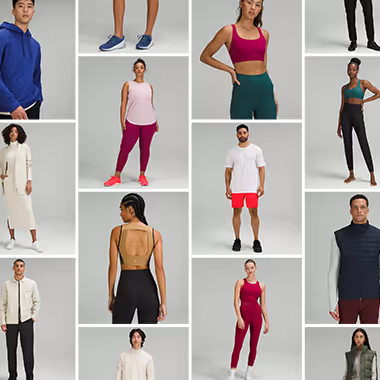
Flexible staffing gave lululemon the L&D expertise it needed to stay on schedule, scale training quickly, and support ongoing organizational growth.

On-demand L&D experts helped Montefiore overcome resource gaps, accelerate training delivery, and support essential organizational priorities.


L&D specialists accelerated Avantax’s platform shift, producing timely, updated training for 3,750 advisors and 400+ employees.


HELPFUL ARTICLES / QUICK READS







%20And%20How%20Does%20it%20Help__Blog%20Featured%20Image%20500.avif)


<svg xmlns="http://www.w3.org/2000/svg" width="30.01" height="27.67" viewBox="0 0 30.01 27.67"><defs><clipPath id="a"><rect width="30.01" height="27.67" fill="none" stroke="currentColor" stroke-width="1.25"/></clipPath></defs><rect width="7.46" height="6.39" transform="translate(3.255 3.205)" fill="none" stroke="currentColor" stroke-linecap="round" stroke-linejoin="round" stroke-width="1.25"/><g clip-path="url(#a)"><path d="M14.6.625h8.47v26.41H.625V.625h8.71" fill="none" stroke="currentColor" stroke-linecap="round" stroke-linejoin="round" stroke-width="1.25"/></g><rect width="7.46" height="6.39" transform="translate(13.225 3.205)" fill="none" stroke="currentColor" stroke-linecap="round" stroke-linejoin="round" stroke-width="1.25"/><line x2="7.46" transform="translate(3.205 12.165)" fill="none" stroke="currentColor" stroke-linecap="round" stroke-linejoin="round" stroke-width="1.25"/><line x2="7.46" transform="translate(13.225 12.165)" fill="none" stroke="currentColor" stroke-linecap="round" stroke-linejoin="round" stroke-width="1.25"/><line x2="7.46" transform="translate(3.205 23.695)" fill="none" stroke="currentColor" stroke-linecap="round" stroke-linejoin="round" stroke-width="1.25"/><line x2="7.46" transform="translate(13.225 23.695)" fill="none" stroke="currentColor" stroke-linecap="round" stroke-linejoin="round" stroke-width="1.25"/><g clip-path="url(#a)"><path d="M13.285 6.995a1.245 1.245 0 0 1 1.47 0 1.245 1.245 0 0 0 1.47 0 1.245 1.245 0 0 1 1.47 0 1.245 1.245 0 0 0 1.47 0 1.245 1.245 0 0 1 1.47 0" fill="none" stroke="currentColor" stroke-linecap="round" stroke-linejoin="round" stroke-width="1.25"/><rect width="7.46" height="6.39" transform="translate(13.225 14.735)" fill="none" stroke="currentColor" stroke-linecap="round" stroke-linejoin="round" stroke-width="1.25"/><path d="M5.835 18.655a1.748 1.748 0 1 1 2.28.02" fill="none" stroke="currentColor" stroke-linecap="round" stroke-linejoin="round" stroke-width="1.25"/><rect width="7.46" height="6.39" transform="translate(3.255 14.735)" fill="none" stroke="currentColor" stroke-linecap="round" stroke-linejoin="round" stroke-width="1.25"/><path d="M3.315 18.525a1.245 1.245 0 0 1 1.47 0 1.245 1.245 0 0 0 1.47 0 1.245 1.245 0 0 1 1.47 0 1.245 1.245 0 0 0 1.47 0 1.245 1.245 0 0 1 1.47 0" fill="none" stroke="currentColor" stroke-linecap="round" stroke-linejoin="round" stroke-width="1.25"/><circle cx="1.59" cy="1.59" r="1.59" transform="translate(15.365 15.055)" fill="none" stroke="currentColor" stroke-linecap="round" stroke-linejoin="round" stroke-width="1.25"/><path d="M29.385 23.185l-1.58 3.86-1.58-3.86V2.2a1.58 1.58 0 1 1 3.16 0Z" fill="none" stroke="currentColor" stroke-linecap="round" stroke-linejoin="round" stroke-width="1.25"/><line x2="3.16" transform="translate(26.225 22.545)" fill="none" stroke="currentColor" stroke-linecap="round" stroke-linejoin="round" stroke-width="1.25"/><line x2="3.16" transform="translate(26.225 4.045)" fill="none" stroke="currentColor" stroke-linecap="round" stroke-linejoin="round" stroke-width="1.25"/><line transform="translate(11.965 .625)" fill="none" stroke="currentColor" stroke-linecap="round" stroke-linejoin="round" stroke-width="1.25"/></g></svg>
Speak to an Expert
Instructional design turns complex ideas into clear, engaging learning that people understand and use. Your content becomes easier to follow, skills build faster, and learners stay confident from start to finish.
Whether you need a full program designed, support to meet a deadline, or a partner to strengthen your learning ecosystem, our on-demand Instructional Designers bring the structure, creativity, and expertise to make training effective.
Connect


