
Request a Call

<svg xmlns="http://www.w3.org/2000/svg" width=" 100%" height=" 100%" viewBox="0 0 59.783 59.783">
<g id="Project_Managers" data-name="Project Managers" transform="translate(0.63 0.63)">
<path id="Path_22887" data-name="Path 22887" d="M24.519,5.87a10,10,0,0,1,5.876,9.1v3.964H9.84V14.972a10,10,0,0,1,5.876-9.1" transform="translate(9.144 5.207)" fill="none" stroke="currentColor" stroke-linecap="round" stroke-linejoin="round" stroke-width="2.5"/>
<circle id="Ellipse_343" data-name="Ellipse 343" cx="5.776" cy="5.776" r="5.776" transform="translate(23.485 0.62)" fill="none" stroke="currentColor" stroke-linecap="round" stroke-linejoin="round" stroke-width="2.5"/>
<line id="Line_579" data-name="Line 579" y2="4.501" transform="translate(29.321 12.949)" fill="none" stroke="currentColor" stroke-linecap="round" stroke-linejoin="round" stroke-width="2.5"/>
<path id="Path_22888" data-name="Path 22888" d="M27.159,39.079H12.778A2.8,2.8,0,0,1,9.99,36.291v-13.9A2.8,2.8,0,0,1,12.778,19.6h14.38a2.8,2.8,0,0,1,2.788,2.788v13.9A2.8,2.8,0,0,1,27.159,39.079Z" transform="translate(9.293 18.823)" fill="none" stroke="currentColor" stroke-linecap="round" stroke-linejoin="round" stroke-width="2.5"/>
<path id="Path_22889" data-name="Path 22889" d="M32.334,39.079H26.378a2.8,2.8,0,0,1-2.788-2.788v-13.9A2.8,2.8,0,0,1,26.378,19.6h5.955a2.8,2.8,0,0,1,2.788,2.788v13.9A2.8,2.8,0,0,1,32.334,39.079Z" transform="translate(22.78 18.823)" fill="none" stroke="currentColor" stroke-linecap="round" stroke-linejoin="round" stroke-width="2.5"/>
<path id="Path_22890" data-name="Path 22890" d="M9.364,39.079H3.408A2.8,2.8,0,0,1,.62,36.291v-13.9A2.8,2.8,0,0,1,3.408,19.6H9.364a2.8,2.8,0,0,1,2.788,2.788v13.9A2.8,2.8,0,0,1,9.364,39.079Z" transform="translate(0 18.823)" fill="none" stroke="currentColor" stroke-linecap="round" stroke-linejoin="round" stroke-width="2.5"/>
<line id="Line_580" data-name="Line 580" y2="14.241" transform="translate(29.261 24.162)" fill="none" stroke="currentColor" stroke-linecap="round" stroke-linejoin="round" stroke-width="2.5"/>
<path id="Path_22891" data-name="Path 22891" d="M49.221,23.14V20.173a4.161,4.161,0,0,0-4.163-4.163H7.713A4.161,4.161,0,0,0,3.55,20.173V23.14" transform="translate(2.906 15.263)" fill="none" stroke="currentColor" stroke-linecap="round" stroke-linejoin="round" stroke-width="2.5"/>
</g>
</svg>
Do I need to hire an eLearning Project Manager?
An eLearning Project Manager ensures training initiatives run smoothly, stay on schedule, and remain on budget.



Locomotive Manufacturing Giant Drives Success with Custom Learning Solutions
Fortune 500 Manufacturer Accelerates Training Outcomes for Field Service Engineers

The high level of interactivity and use of superior 2D and 3D graphics, as well as virtual reality, helped increase learner engagement.
Client
One of the biggest companies on the Fortune 500 list, offering equipment, services, and solutions across rail, mining, marine, stationary power and drilling industries, the client is a pioneer in passenger and freight locomotives, employing more than 10,000 people.
Challenge
Driven by the exponential growth in demand for its key products - locomotives and engines for drilling and marine applications, the client was expanding at a fast pace across geographies. The accelerated growth, however, resulted in a daunting challenge. With increasing product sales, they needed to deploy highly skilled technical advisors and directors who could service more than 900 locomotives each year. This meant adequately training and familiarizing Field Service Engineers (FSEs), both at client and end customer sites, with specialized skills required to maintain and troubleshoot highly sophisticated locomotives.
The client wanted to expedite the current training cycle to significantly increase the number of skilled resources, enabling them to keep pace with growing demand and offer speedy customer service. This required developing a robust device-agnostic training strategy, providing global access to customized content through existing OS and platforms, and offering training both offsite and at service locations.
Through the training program, the client was also looking to reduce onboarding time for employees, cross-skill employees across technical and advisory roles, and boost revenues by equipping customers with adequate knowledge.
Strategy & Solution
ELB Learning collaborated with the client to build a comprehensive learning solution aligned with the individual learning requirements of end-user groups. The key steps in delivering the holistic learning solution involved:
- Mapping broad responsibility areas with roles; matching tasks to roles and organizing categories for each responsibility area
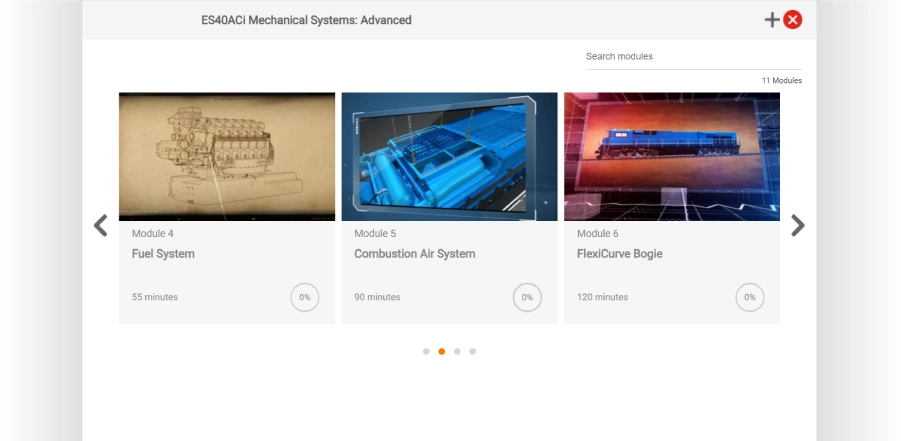
- Designing an interactive Job Task Analysis (JTA) tool to create a structured curriculum by mapping job tasks for specific roles to online training modules
- Understanding and defining work done by employees across four key roles—technical advisors (TAs), technical directors (TDs), lead technical advisors (LTAs), and lead technical directors (LTDs)—in five different locations
- Analyzing the existing 230 courses and mapping more than 900 tasks to existing Instructor Led Training (ILT) material
- Developing a curriculum development roadmap
Based on the results of the JTA analysis, our team structured the training course with defined learning paths for different user groups. The course was split into three main categories—Diesel Engine, Mechanical, and Electrical—with each category comprising a basic and advanced section.
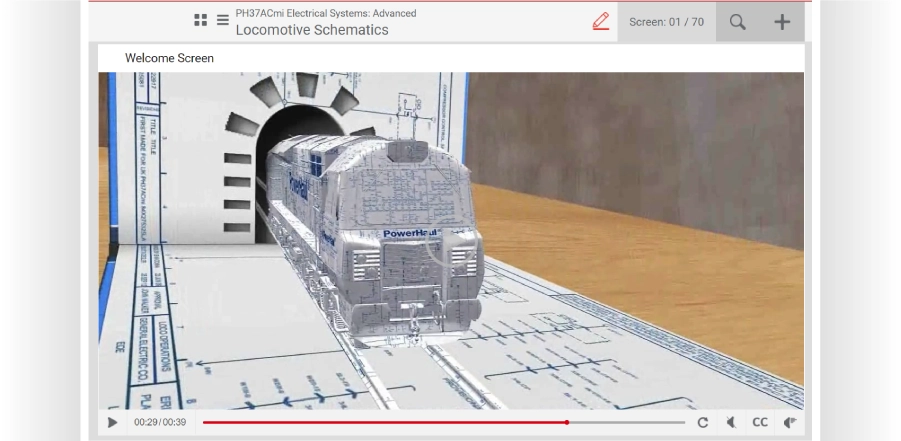
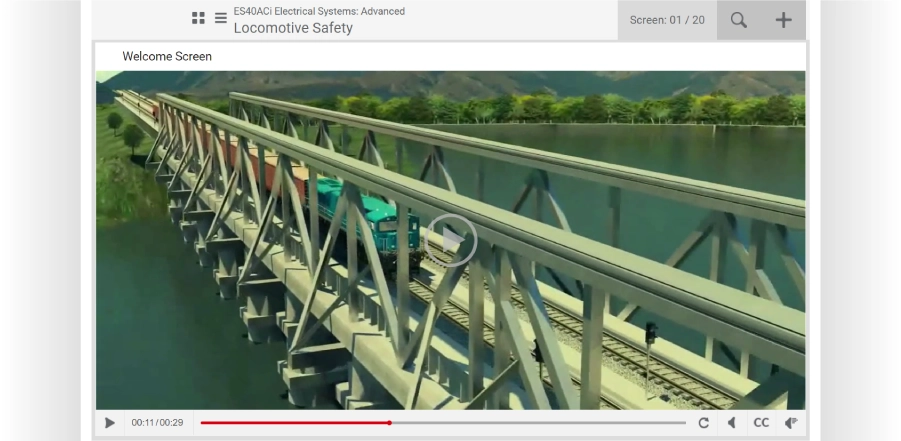
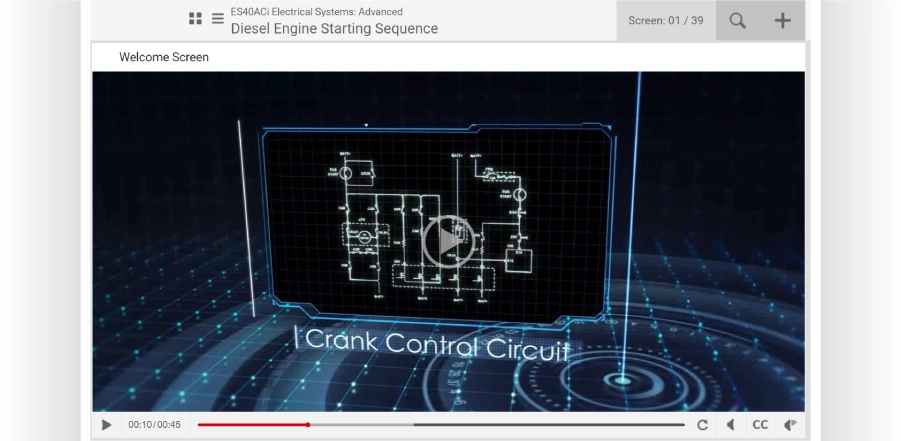
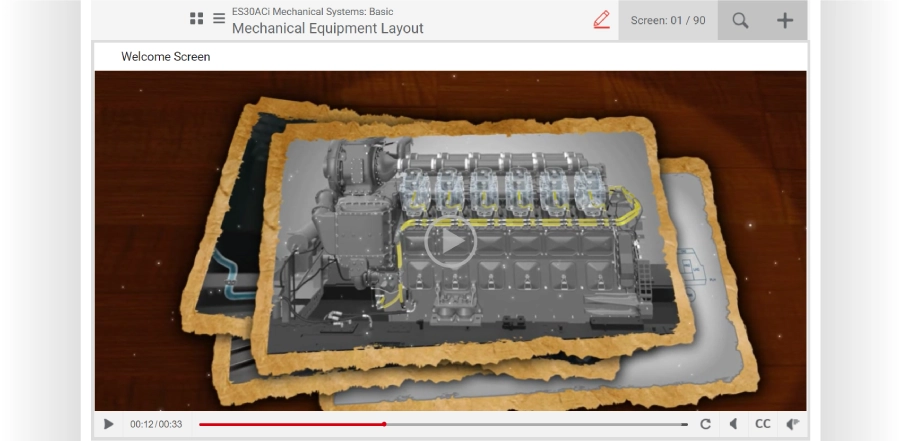
Storyboards for the course modules were created based on existing ILT content. In addition, we leveraged reference manuals (GEKs) provided by the client to ensure technical accuracy of the content. Media-rich courses, including 3D and 2D graphics, animations, and interactivities were created to give engineers a realistic feel of the locomotive.
Our end-to-end solution included:
- A realistic locomotive walk-through visual-based training for quick assimilation and greater retention
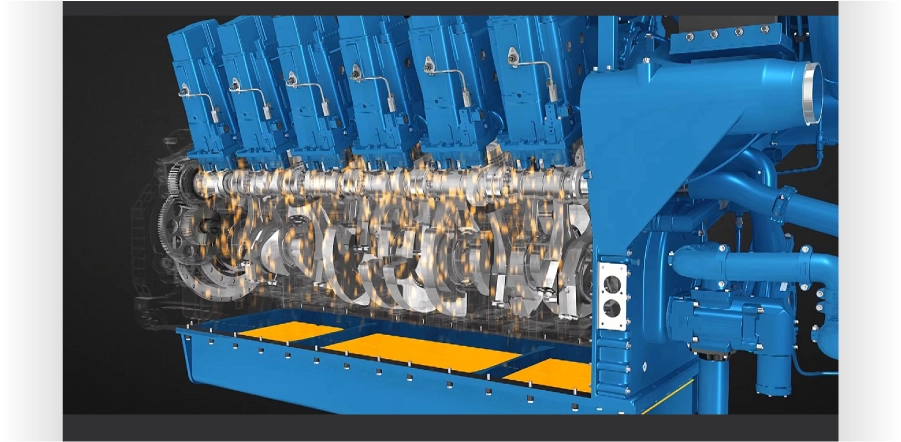
- 3D graphic design to provide minute details right down to the component function level
- Immersive learning experiences for technical procedural training
- A touch and feel experience of physically handling a real locomotive located on the shop-floor assembly lines
- Learning management system (LMS) content compatible with modern technologies
Over the course of the six-year partnership, ELB Learning also developed other online courses to help learners get a real-life feel of various locomotives. These included:
- Creating interactive 3D animations through Unity 3D to offer hands-on experience on the working of the GEVO ( Evolution Series) diesel engine and its major components
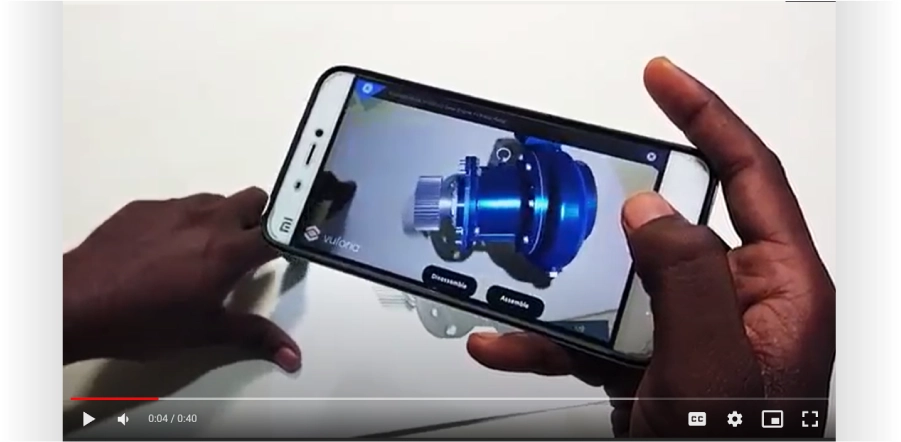
- Developing a state-of-the-art app using NFC, enabling learners to identify, explore, assemble, disassemble, troubleshoot, and purchase any kind of mechanical and electrical components in high-definition real-time 3D simulated environment
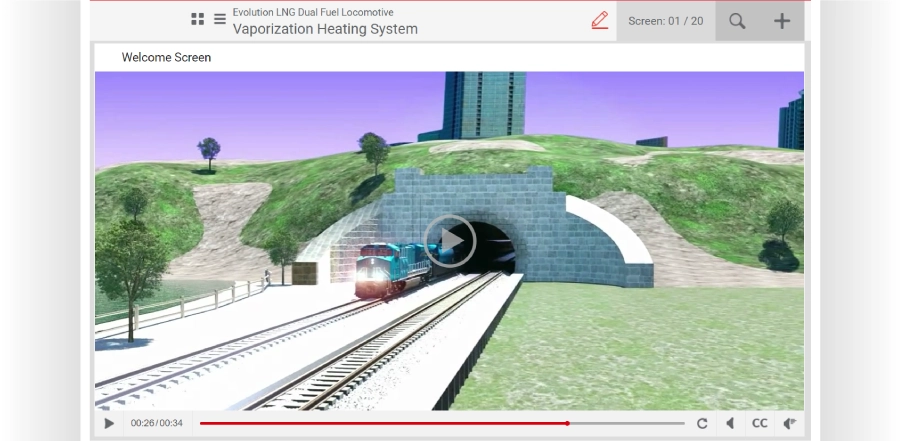
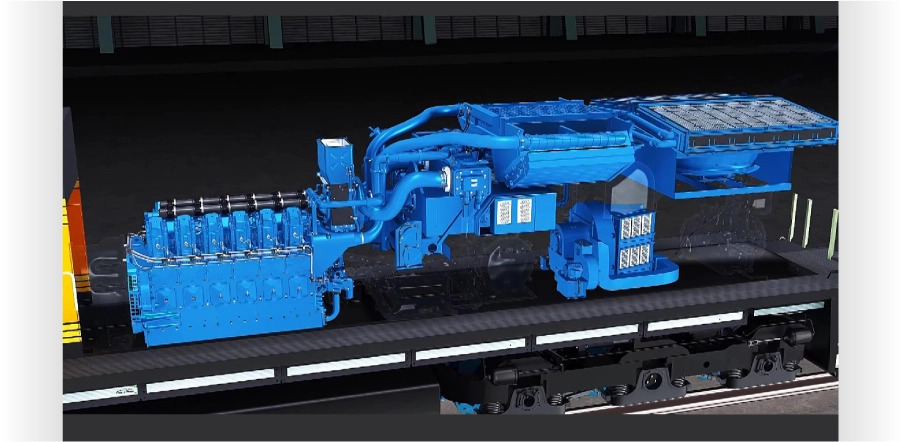
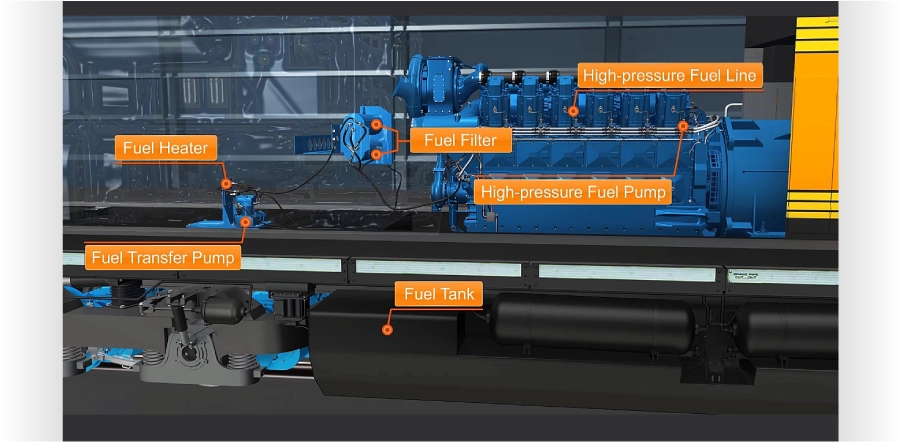
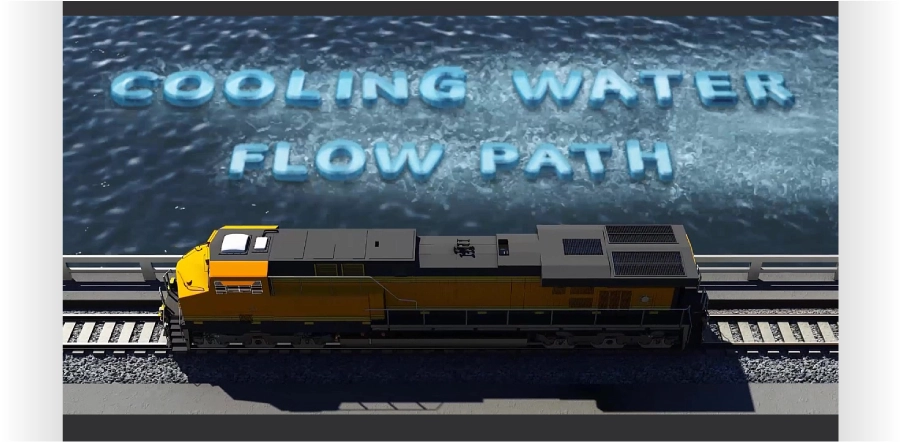
- Building full HD 3D simulated videos for the Evolution Series locomotive, demonstrating the flow of fuel, oil, water, and air Crafting a HD 3D video depicting a high-level description of a dual-fuel locomotive (fueled by diesel and natural gas)
- Structuring an interactive application that offers users a holistic walkthrough of the GEVO locomotive to help them navigate through different cabs and explore the major components of the cabs
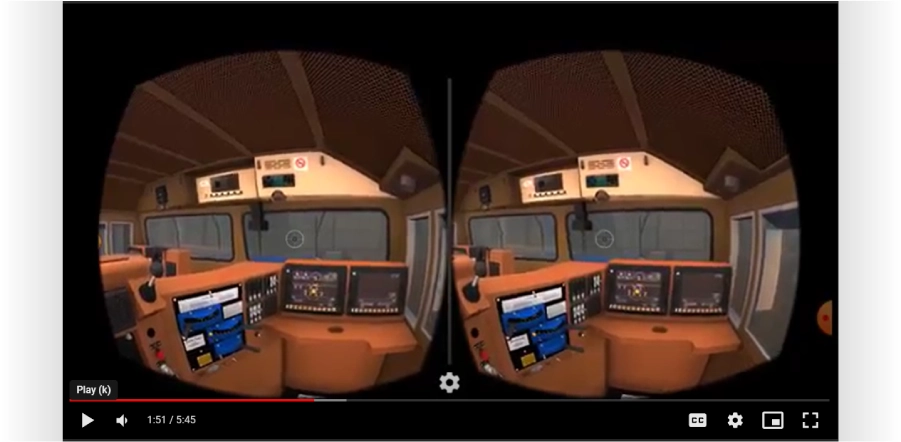
- Creating an application underpinned by cardboard virtual reality to emulate the diesel engine surroundings in a tangible and enticing high-end 3D environment
Results
The ELB Learning custom solution delivered a superior learner experience by providing a virtual learning environment for any time, anywhere access. The high level of interactivity and use of superior 2D and 3D graphics, as well as virtual reality, helped increase learner engagement.
The increased engagement, in turn, ensured that more learners enrolled for the course and completed certification programs within the stipulated schedule.
Some of the tangible benefits delivered include:
- Reduced learning time by 73% as compared to traditional training methods
- Increased training acceptance by 40% over traditional training methods
- Optimized classroom training time by 25%
- Reduced training-related travel costs by 40%

Connect


